
This past month my partner and I spent time backpacking on the Baekdu Daegan. The Baekdu Daegan is an unbroken mountain range that is nearly 500 miles long and runs the entire length of South Korea. The trail is known for its rugged terrain and beautiful vistas. As Roger Shepard said in his own reflection of the Baekdu Daegan — “For [Koreans], they told me, it was more than an adventure; a way for them to discover themselves, their identity of what it means to be “Korean,” a pilgrimage.” (1). I am not Korean, but reading stories like Roger’s gave me confidence that I had a lot to learn from this mountain range.
The Tortoise and the Hare
At 12pm on the first day backpacking through Jirisan National Park we summited Samdobong peak and met an old man solo hiking the same path as us. This was no easy route; we would cover nearly 25 miles and 10,000 ft of vertical climbing within three days. We spoke briefly, but he was eager to continue hiking. While he pressed onwards, we stopped for lunch and enjoyed the view. Three hours later we arrived at our shelter for the night, the same one the old man was planning to stay at. We arrived before him and the park ranger told us we had enough time to continue to the next shelter. With a bit of energy left, we took his advice, continued down the trail for another two hours, and spent the night at the following shelter.
The next day, I awoke at 5 am to make coffee and prepare our gear. I was quietly cooking when I saw the same old man from the previous day walk into camp around 5:15 am. He sat at the table next to me and his sports watch chimed. The watch announced various metrics, including his pace and hike duration. He was averaging less than 1 mph and had been on the trail for almost three hours. This told me two things: he was hiking slowly, and he had started hiking three hours earlier – at 2 am. He only took a 5-minute break before returning to the trail. From our earlier conversations, I knew he was heading to the same camp as us. At his current pace, his journey would continue for more than eight hours.
The reason this stands out to me is that we were traveling the same trail, the same distance, and staying in the same shelters as this old man. The only difference is that we were young and could spend half as much time hiking as him. We were starting early at 5 am, and he would start earlier. We would finish each day at 4 pm and he would still be hiking. Yet, at the end of the three days, he would cover the same distance, summit the same mountains, and sleep at the same sites. The result would be the same. However, he knew that with his age, his pace would be slower and his body would ache more. In order to finish at the same time, he would rise earlier and take fewer and shorter breaks. None of this deterred him, brought his spirits down, or caused him to complain.
As I mentioned in my very first journal entry, I left my job to begin a new chapter in my career. Up until this point, I had spent years climbing the proverbial mountain of proficiency. Now, I am starting over. I am an amateur. I am back at the trailhead. As I watched this solitary old man, twice my age and working twice as hard, trekking across the same mountain range as me, I felt a kinship with him for my own journey back home. He embodied the timeless quote “life is not always fair”; some people are faster, stronger, more experienced, younger, or more capable than others. But, that is not a reason to avoid taking on new challenges and opportunities. When I am struggling, I will try to recall the old man in South Korea who accepted his shortcomings and deliberately worked to overcome them. Like him, I will not be demoralized by my younger and more capable peers, I will appreciate my own journey for what it is.
The Mountain Trials
The capital city, Seoul, is a sprawling super metropolis nestled between rolling hills, and shallow valleys. Seoul’s unique topology can offer a great view of the city for those interested in hiking, but it also foreshadows the terrain of the entire peninsula. As we hiked, bused, and taxied our way around the country, it was hard to find more than a few acres of flat ground.
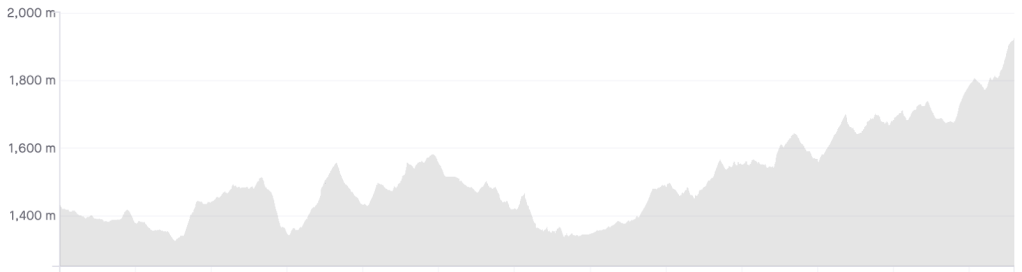
The final leg of our backpacking was through Jirisan National Park. This is the elevation chart for that section of the route. I would liken it to hiking on the edge of a saw blade, with countless steep ascents followed by knee-shattering descents. This was the most physically demanding part of our trip, on one occasion the grade(slope) of the terrain reached 68 degrees. There was no time to enjoy a summit because it meant another excruciating descent was imminent. The moment we reached the bottom and our knees could rest, we were climbing up boulders to the next peak. For most of the journey, we found this cycle of pain demoralizing. We did not get to enjoy each small victory before the next challenge came along.
To Be Of The Mountain
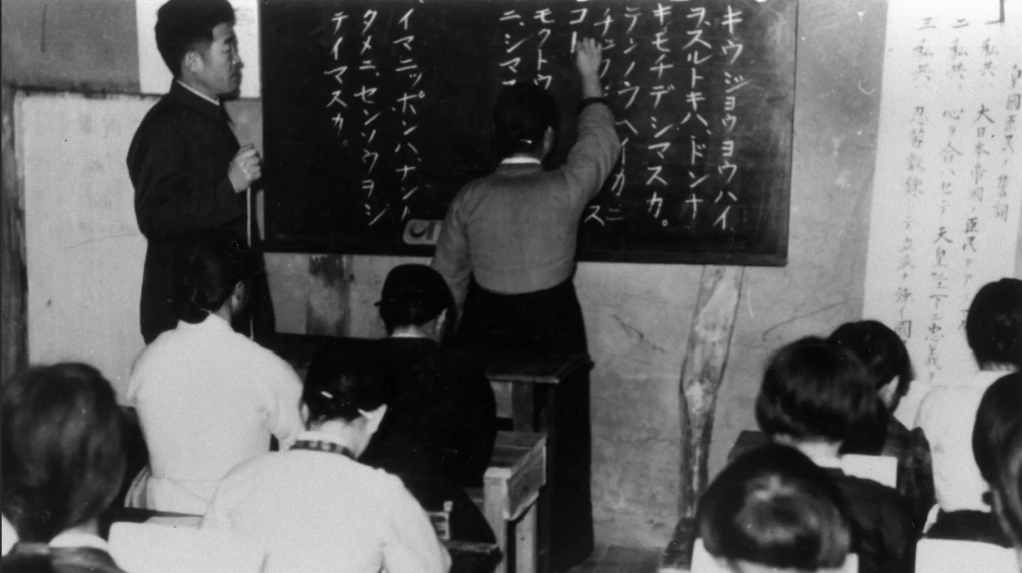
I am not a historian. However, I wondered if the relentless and unforgiving terrain of the Beakdu Daegan could have been a metaphor for the Korean experience. The 1900s were largely a period of strife for Korea. Around 1910, Japan annexed, occupied, and renamed the independent country of Korea to Chōsen (2). Japan tried to take away the Korean identity by forcing people to change their names, learn Japanese, and be conscripted into the Japanese military. Following Japan’s loss in World War II, Korea was used as a pawn between Western and Eastern powers in the Korean War. Over one million Korean service members and civilians lost their lives in this war (3). After all of this conflict, South Korea was even poorer than the North with a GDP per capita of less than $100 (4). Living through these decades as a Korean may have felt impossibly difficult, but after all this time, the country has been transformed. Every bit of growth was hard-fought, and today Korea has emerged as an economic and cultural powerhouse in Asia and arguably the world. In many ways, this painful history is represented in the Beakdu Daegan, an unbroken mountain range of limitless challenges and no easy route across. But, like Korea and its people, these mountains are also warm, surprising, and beautiful. This begs the question, what similarities can we find in our own heritage and the geography that it belongs too?
Clo
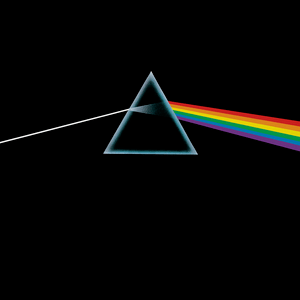
At some point on our last day, I finally understood what the mountains were trying to tell me — If you focus solely on the destination, you may forget to enjoy the journey. This realization reminded of Pink Flloyd’s Dark Side of Moon album cover from 1973. In the album artwork, a simple white light refracts into a vibrant rainbow. Similarly, my mentality refracted from one of monotonous suffering, into a beautiful appreciation of how the Baekdu Daegan trail had challenged us unlike any that had come before it.
Thank you for reading,
Z
Sources:
- The Baekdu Daegan as a Symbol of Korea – Roger Shepherd
- The Entire History of Korea in 5 minutes – History on Maps
- Korean War – Statistica
- Korea’s Path from Poverty to Philanthropy – Kongdan Oh
- New York Times – My Family’s Shrouded History Is Also a National One for Korea – Alexander Chee
- Grade(slope) – Wikipedia
- Dark Side of Moon – Pink Flloyd – Wikipedia
 Thinking of Z